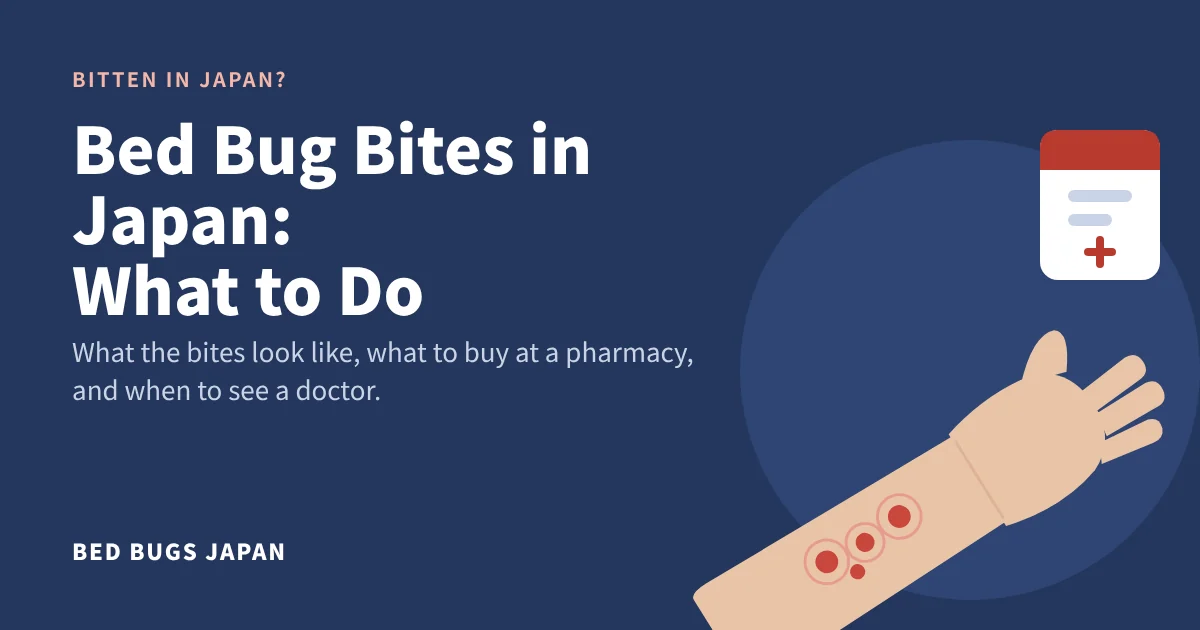
Most bed bug bites can be treated with an anti-itch cream from any Japanese pharmacy. Wash the bites, stop scratching, buy the right cream, and tell the hotel right away. See a doctor if the bites get worse or you have trouble breathing.
This page is general information, not medical advice. If you are unsure, see a doctor or pharmacist.
What do bed bug bites look like?
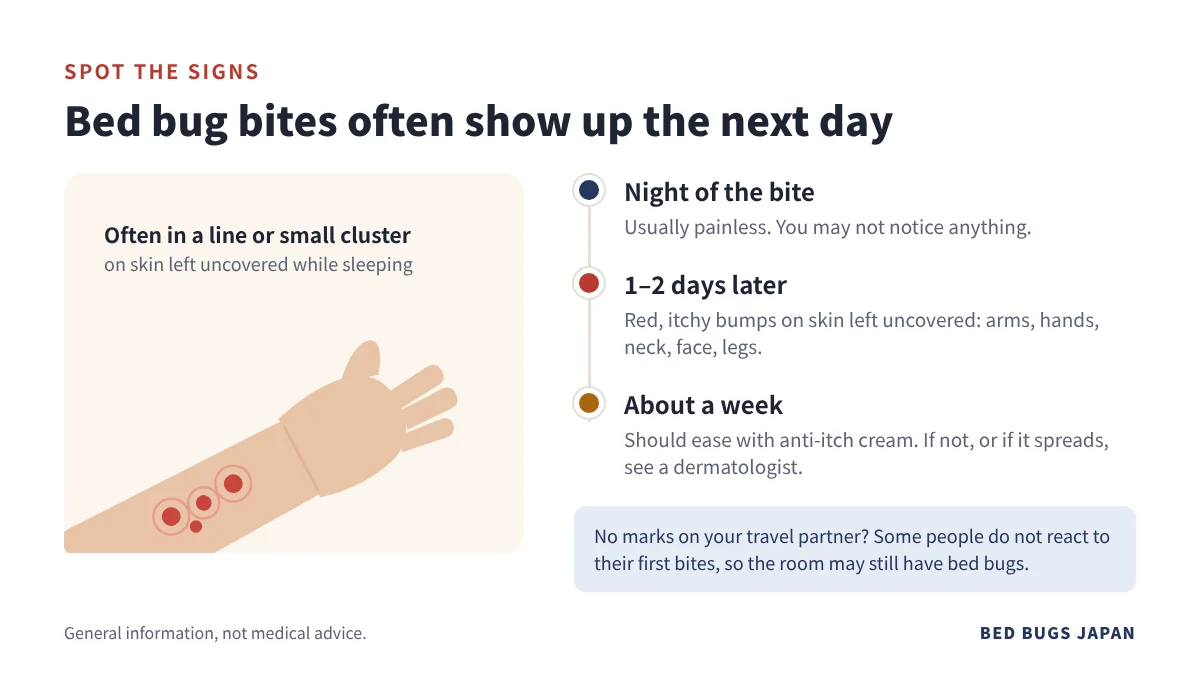
- Red, itchy bumps, often in a line or small cluster
- On skin left uncovered while you sleep: arms, hands, neck, face, legs (Saitama City)
- They often appear 1 to 2 days after the bite, not the same night (Mynavi News, interview with a dermatologist)
Some people do not react at all the first time they are bitten, and itch more after repeated bites (Itabashi City). So a travel partner with no marks does not prove the room is clean. Bed bugs are not known to spread disease, but the itching can be intense and scratching can cause infection.
What to do right after you notice bites
- Wash the bites gently with soap and water.
- Do not scratch. Keep your nails short and use a cold, damp towel for relief.
- Take photos of the bites and, if you can, of any bug you find. Put the bug in a sealed bag or on clear tape.
- Check the bed: mattress seams, sheet corners, headboard. Look for small brown bugs or dark spots.
What to buy at a Japanese pharmacy
Japanese drugstores (look for 薬 or ドラッグストア) sell anti-itch creams without a prescription. A Tokyo dermatologist recommends steroid creams for bed bug rashes, and antihistamine pills when itching is strong (Mynavi News). Products named there include Muhi Alpha EX (ムヒアルファEX), Betnevate N Ointment AS (ベトネベートN軟膏AS) and Rashuria PE Cream (ラシュリアPEクリーム).
Show this to the pharmacist:
虫刺されで、とてもかゆいです。ステロイドの塗り薬はありますか?
(I have insect bites that are very itchy. Do you have a steroid cream?)
Check the label for face use and age limits, and tell the pharmacist if you are pregnant or take other medicine.
When to see a doctor
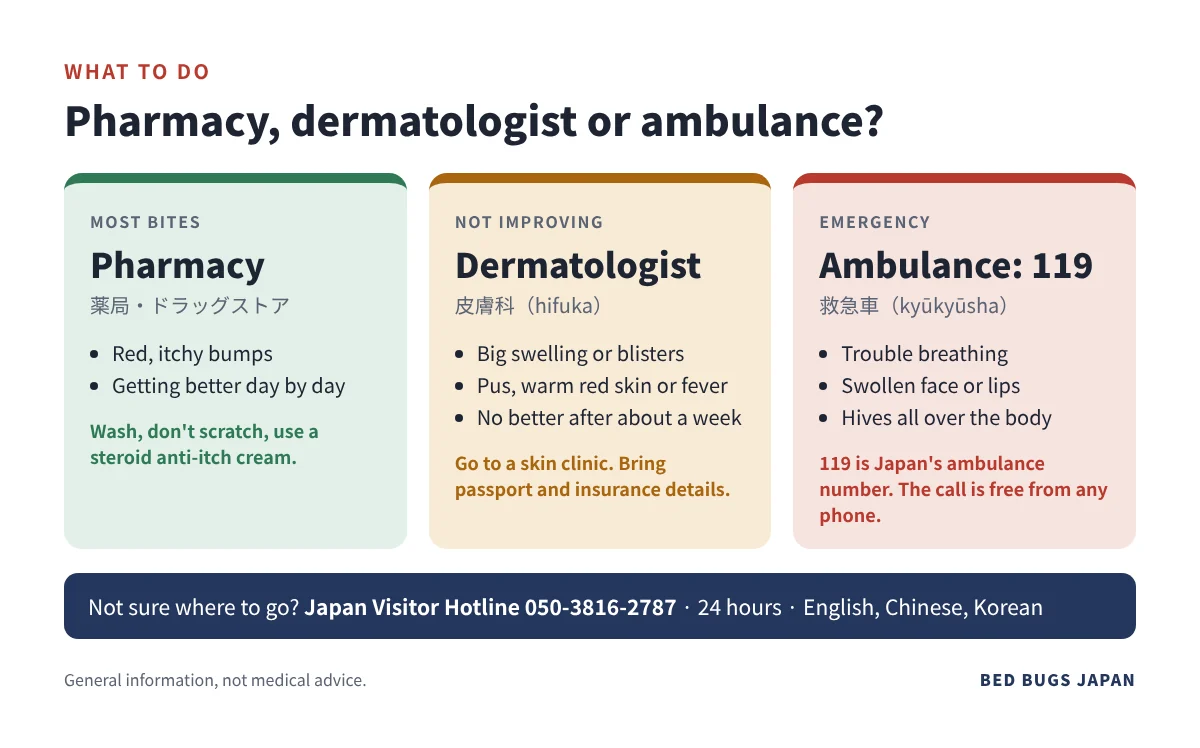
See a dermatologist (皮膚科, hifuka) if:
- The bites swell a lot, blister, or keep spreading
- You see pus, warm red skin around the bites, or you get a fever
- The itching is no better after about a week of cream
In Japan you go straight to a specialist clinic, not a general practitioner (Hamamatsu tourism). Bring your passport and travel insurance details.
Call 119 for an ambulance right away if you have trouble breathing, swelling of the face or lips, or hives all over your body. These are signs of a serious allergic reaction (Mynavi News).
119 is Japan’s emergency number for an ambulance (and the fire service), like 911 in the US or 112 in Europe. The call is free from any phone, including mobile phones. Many areas can connect you to an interpreter in English and other languages, for example Sakai City. Say “Kyūkyū desu” (救急です), which means “It’s a medical emergency.”
Not sure where to go? The Japan Visitor Hotline helps tourists 24 hours a day in English, Chinese and Korean: 050-3816-2787 (Tokyo Metropolitan Government).
What to tell the hotel
- Go to the front desk with your photos. Ask for a room on a different floor, and ask them to inspect the room. See How to Say “Bed Bugs” in Japanese for phrases to show the staff.
- Before moving, shake out and check your bag. Seal worn clothes in a plastic bag.
- Wash and tumble-dry your clothes on high heat as soon as you can. Many hotels and coin laundries have dryers.
- Ask the hotel for a written note of what happened. It helps with refunds or insurance claims.
Report it
Help other travelers: send the hotel name, date and a photo to @BedBugsJapan on X. We add reports to our map with the date and source.
Want to know how common this is? Read Does Japan Have Bed Bugs?