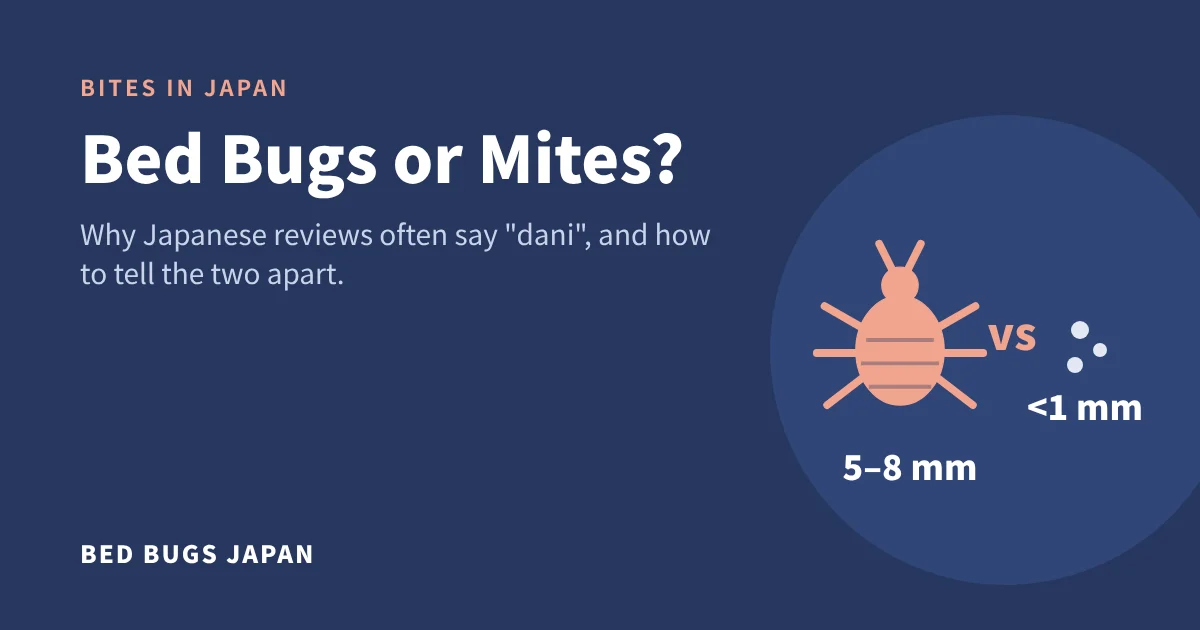
In Japan, itchy bites after a hotel stay are often blamed on ダニ (dani, mites). You will see the word in many Japanese hotel reviews and may hear it from staff. But bed bugs and mites are different animals, and the difference matters: treatments for mites do not get rid of bed bugs.
Open the bed bug map→Guest reports from 2,300+ hotels across Japan, pinned on one map.This page is general information, not medical advice. A doctor cannot always tell from bites alone what caused them.
The short answer
If you can see a small, flat, brown bug, or dark spots on the sheets, it is more likely bed bugs. Mites are almost too small to see. Bed bugs are not mites at all. They are insects, related to neither lice nor mites (Itabashi City).
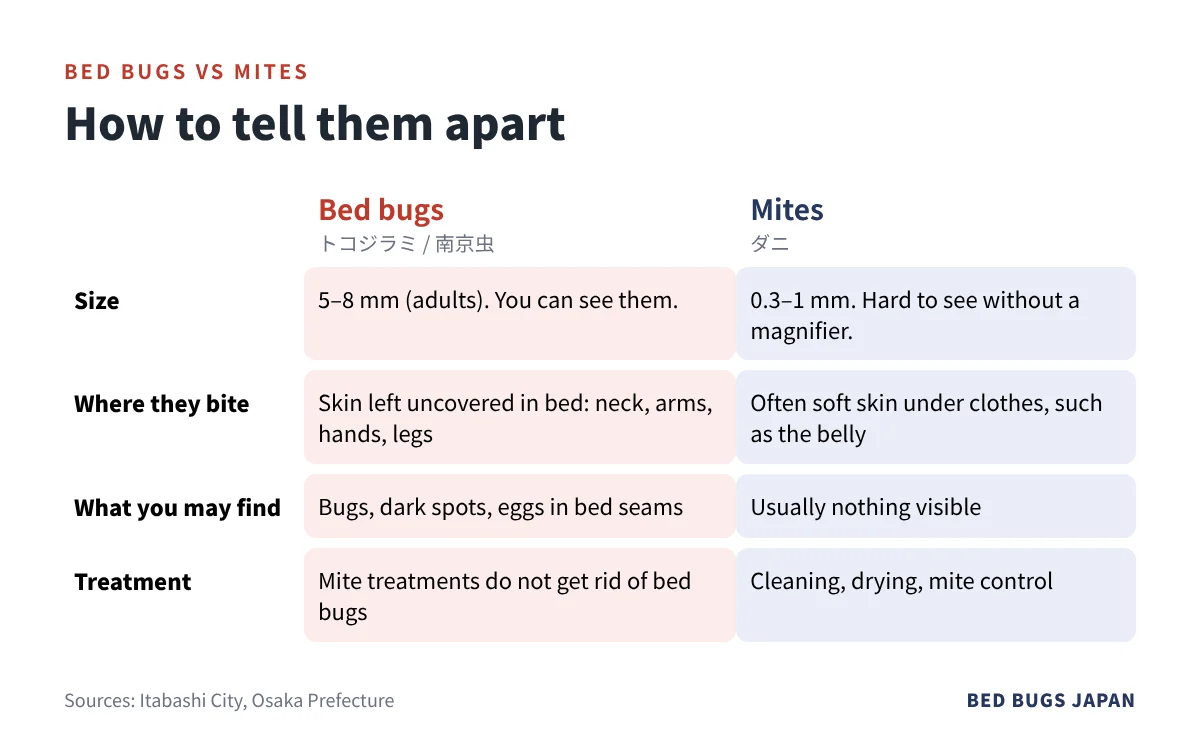
Bed bugs vs mites at a glance
| Bed bugs (トコジラミ) | Mites (ダニ) | |
|---|---|---|
| Size | Adults 5–8 mm. You can see them. | House mites 0.6–1.0 mm, tsumedani mites 0.3–1.0 mm (Itabashi City) |
| Where they bite | Skin left uncovered in bed: neck, hands, arms, feet (Fukuoka City) | Often soft skin, such as the belly (Osaka Prefecture) |
| When | At night, while you sleep | Varies by type |
| What you may find | Bugs, dark spots or eggs in bed seams | Usually nothing visible |
| Does mite treatment work? | No. Mite control does not wipe out bed bugs (Itabashi City). | Yes |
Why Japanese reviews say “dani”
Dani is the everyday word for any small biting thing you cannot see, much like people say “bug bites” in English. When we search Japanese hotel reviews for our map, many guests write that they were “bitten by mites” without having seen anything. So the word dani in a review does not rule bed bugs in or out.
Clues that point to bed bugs in a review:
- The guest saw a bug, or found black dots or blood on the sheets
- The bites are on the arms, neck or legs, often several in a row
- The words トコジラミ (tokojirami) or 南京虫 (nankinmushi), which both mean bed bugs
Timing can fool you
Bed bug bites can show up several days later (Osaka Prefecture), and people bitten for the first time often have no reaction (Itabashi City). So the bites you notice may come from a different night, or a different hotel, than the one you are in now. If one person in a room has bites and the other does not, it can still be bed bugs.
How to read mite reports on our map
On our map, a “mite report” (blue pin) means the guest wrote dani in their review. We keep the guest’s own word, but most people cannot tell mites from bed bugs. The house mites most common in Japanese bedding are not thought to bite or suck blood at all (Chiba City, in Japanese).
So read a mite report the same way as a bed bug report: a guest was bitten in bed at that hotel. Check the date, read the review if you can, and check the room when you arrive.
What to do
- Check the bed for the signs in How to Check a Hotel Room for Bed Bugs.
- If you find bugs or dark spots, tell the front desk and ask for a room on another floor. If staff say it is “just mites”, you can ask them to check for トコジラミ specifically, using our phrase card.
- Treat the bites: see Bed Bug Bites in Japan: What to Do. If you can, bring the bug (or a photo) to the doctor (Osaka Prefecture).
Before you book, check our map for bed bug and mite reports at your hotel.
Found bed bugs at a hotel in Japan?Report it →Tell us what happened. Photos and a link to your review help other travelers.Planning where to stay in Japan?
Check the reports for your area first in bed bug reports by area, then compare prices and book a hotel:
Also useful: Things to do in Japan on Klook · Japan eSIM on Klook
Affiliate links (hotel sites and Klook): we may earn a commission if you book, at no extra cost to you. It does not affect our reports. Learn more
Comments